
By Michael Mottern
Maria Love (neè Mary Moltby) was a prominent Buffalo native in the late 1800s and was originally from the town of Clarence in the South towns of Western New York in what is now the Buffalo NY metropolitan area, still one of the poorest cities in America. Unlike Mary’s time, there’s no commuter train that can go from Clarence to Delaware avenue in the City of Buffalo, which affects working class commuters that are disproportionately people of color. However, she had a lasting effect in the City of Buffalo, creating the first childcare facility in the city, The Fitch Crèche, modeled after the French system of childcare which means, “To cradle your baby.”
In the late 19th century, there was no real social safety net in the US; Grover Cleveland was ignoring it as a presidential contender, candidate, and prominent Buffalonian. Cleveland had a tendency to ignore the plight of the poor and the many dilapidated tenements where mostly Italian immigrants were living. As a result, his presidency was seen as historically lackluster when it came to dealing with the blight that befell human beings and the amount of poverty that was coming out of the industrial era, but in the City of Buffalo, Cleveland’s hometown, we see a different pattern in a so-called old biddy, a woman, who cared about the plight of the poor and did not believe that children should be, “just collecting driftwood” (a piece of coal that fell off the coal car train to fuel homes).
She believed that children, instead of scrounging for fuel for their homes, should be learning or playing or enjoying themselves because no matter what was going on with systemic racism, lynchings, and Cleveland’s rather anti-American, xenophobic and anti-Italian immigrant policies, it still didn’t stop the fact that many of the nation’s immigrant population, hard workers as they were could not get out of poverty during the industrial era, and the situation was dire for everybody, immigrant and working class alike. We are reminded of the many smells that come out of the term poverty but nothing is more powerful of a stench than 12 people occupying one room no bigger than my small living room and my one room apartment in Tonawanda. I can only imagine what it was like in the lower West side for early Italian immigrants.
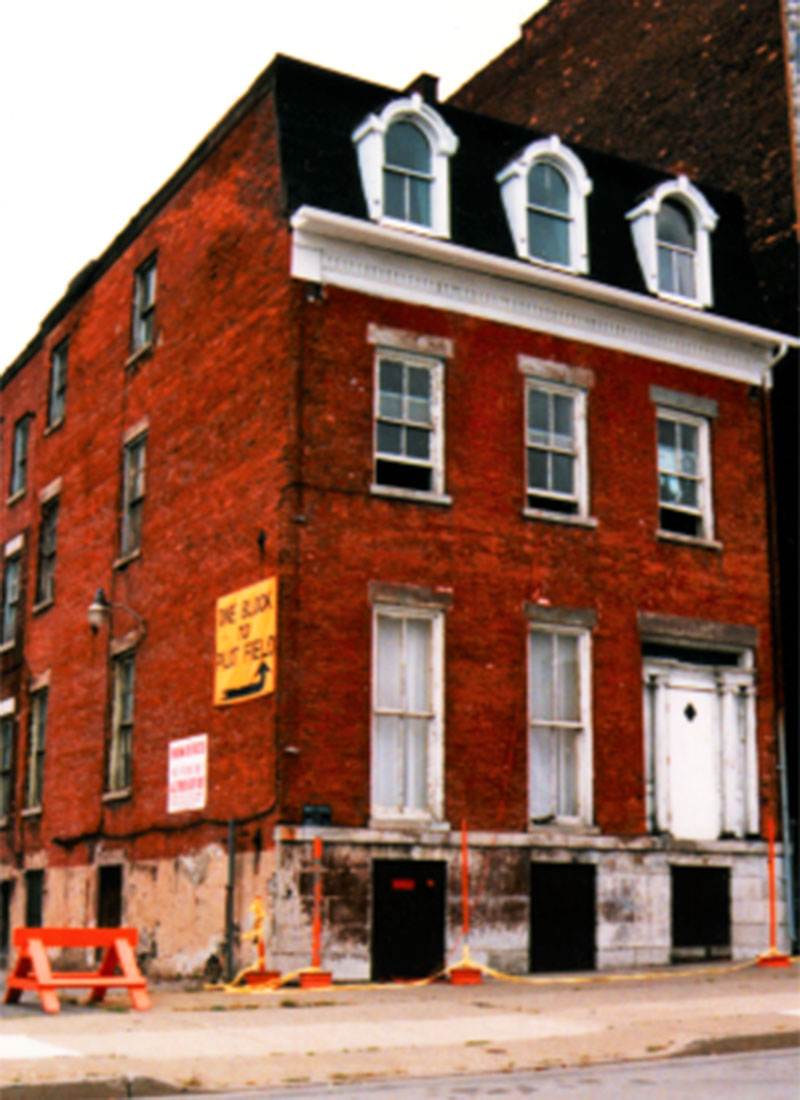
However, this is where it gets complicated: Love was also an anti-suffragette during the Progressive Era when women were fighting for the right to vote as well as equal treatment under the law. She felt that voting might break up the family as opposed to help it and that women needed to be closer to their children, an argument made then by Christian conservatives. Her childcare facility, “The Fitch Crèche” a home smaller than the early maternity ward on Delaware and Edward in Buffalo, was not too far from Millionaires Row and was located on Swan Street in the downtown area. It was equipped with both a nursery, a sizable backyard, and a playroom.
This form of direct help led to the Maria Love Convalescent Fund, a charity that helps the less fortunate get back on their feet with stipends for bills, clothes, food and medicine. Being in therapy and in a private counseling center once started by the Episcopalians, I’ve learned about “The Fund,” offering charitable help to those in need, those who come out of prison or have fallen on rough times.
Maria was a pioneer. Progressive Buffalonians look back at her as being an alternative, a breath of fresh air regardless of where any of us come from. As a scholar of Buffalo history, thank God for Maria Love. She showed what hard work and dedication can do in the field of social services. I’m actually proud that someone like that, even if a bit flawed, comes from Buffalo, with the stiff upper lip and committed to human and social services. Like Teddy Roosevelt, she had a social democratic spirit!
Michael Mottern is the First Vice-President of SDUSA.
Thank you for sharing from your stores of historical knowledge, Michael!