Switzerland offers a useful lesson for American social democrats: broad collective-bargaining coverage can strengthen workers’ wages and conditions even when union membership is relatively low. Switzerland is a wealthy country, and that fact helps support its citizens’ living standards.
Why is its economy so vibrant? It combines high‑value industries, world‑class human capital, and extreme political stability into one of the most efficient economic models on earth. Its high-end industries include pharmaceuticals, chemicals, medical devices, luxury watches, life sciences, advanced technology, and precision machinery. Strong intellectual property protection and deep R&D ecosystems keep these sectors competitive. Financial services also power the economy. Private banking, wealth management, and insurance attract global capital. The Swiss franc’s safe‑haven status reinforces financial stability. In addition, Switzerland’s dual education system is one of the most effective in the world – apprenticeships and vocational training produce highly skilled technicians and managers.
Wages for workers are always an issue for any social democrat. In the Swiss economy, high productivity per worker powers the country’s high living standards, but what about the labor movement? Union density is low, though not as low as in the United States, at 15 percent of the workforce. At the other end of the spectrum, Scandinavian countries have a union density of 50 to 70 percent of the workforce. However, the Swiss labor movement still wields power. The main union federation is the Swiss Trade Union Federation, and key unions include Unia (construction, retail, hospitality), Syna (services, healthcare), VPOD (public sector), and KV Schweiz (commercial/administrative). Swiss Collective Labor Agreements are the core mechanism Switzerland uses to regulate work conditions while avoiding a big welfare state, stronger unions, or heavy national labor laws. The agreements are sector‑wide contracts negotiated between unions and employer associations, and they quietly shape the Swiss labor market, meaning union power stretches far and wide.
Despite a lower density, 47 to 48 percent of Swiss workers are covered by collective labor agreements. How is this? Collective bargaining agreements in a particular industry – bargained on by unions and employer associations – are extended to all workers in that industry, regardless of whether they’re in a union or not. The employer must follow the agreement on minimum wages, working hours, overtime rules, vacation rules, training requirements, and safety standards. Of course, not all sectors are covered because not all sectors have collective bargaining agreements, but it’s easy to see how these agreements use unions to empower all workers.
Strike activity is very low in Switzerland. As a social democrat, I believe strikes should be used as leverage. However, strikes have downsides because they interrupt the flow of goods and services to the market. Laws prohibit striking while collective bargaining agreement is in force, which helps maintain order between employers and employees. I can’t help but think extending union-bargained wages and benefits to whole sectors plays a role in this as well. Employees without unions don’t have the option of strikes but can still benefit from collective bargaining agreements.
Switzerland is a social market economy (a free market combined with union power, social insurance, regulation of private industry, and social welfare), in a sense like Germany, although it’s not as much of a social market economy. One could call it a liberal coordinated market economy. It mixes market liberalism (flexible labor markets, competition, low regulation, and low taxes – but good public services) with high‑skill coordination (strong vocational training, export‑oriented industries, stable institutions).
A Swiss-style system for extending collective bargaining agreements could raise wages and improve working conditions for more American workers. The U.S. economy already resembles Switzerland’s in some respects, particularly its market liberalism, but adopting sector-wide extensions would require major legal and institutional changes.
The federal government needs a representative body to ensure agreements apply across an industry and to enforce wage and benefit standards. Some union leaders might object to covering employees who do not pay dues, yet the broader principle is compelling: collective bargaining can benefit entire groups of workers, including people who otherwise lack union representation.
Jason Sibert is the Lead Writer of the Peace Economy Project.
Is there a certain logic to achieving social democracy in America? In respect to differing viewpoints and our democratic tradition, most definitely. Who buys the products and uses their disposable incomes to fuel our economy? Who provides the needed labor to produce goods and services? Should capitalism remain unchallenged, in this age of high prices and scarcity? Does everything require commodification? Can democracy be fully achieved?
All the talk from both the far left and far right about “how we have no democracy here in America“ is so self-serving. On the right, we have seen the total replacement of the GOP by something worse and more dangerous, a dominant MAGA. And on the left, we have cancel culture and the opinion of the DSA via their Marxist cadre groups and caucuses, who falsely argue “we are the real existing socialism for America.” This is no different than what the Communist Party USA pushed onto their minions in the ‘60’s, ‘70’s and ‘80’s, and is a total deviation from democratic socialism.
The idea of a “liberal democracy” is being fully discredited by both camps. The idea that has preserved our societies for centuries is under attack. From “liberal democracy”, we have a court system, with law enforcement and prisons, and an immigration system, both with rights which we can all agree on. The direction of this argument is some kind of civil war so that one side gets subjugated. And the argument that sometimes deaths are necessary during revolutions is totally unacceptable. Means and ends get warped and twisted, and do not serve societies’ long-term interests, particularly in our nuclear age. Is this appropriate?
Can we agree on an economic system? The “right” retains a “rugged individualist” model, which leads to the obvious slogan “we either hang together or we hang separately.” It looks like the latter hanging is prevailing. The far “left” pines for a collectivist form, which has its own pitfalls. We saw what happened to the USSR’s “real existing socialism.” There were no workers’ rights, no freedom-like speech and artistic liberty.
Why can’t we create a system which ultimately establishes the dignity and self-worth of every individual member of our society, independent of one’s age, race, creed, gender identity and economic class through an agreed economic system that can achieve these ends? Our view of capitalism should never stand still; it needs constant critique. Some argue that Marx was no “Nostradamus, “yet this statement is so disingenuous; he tried to tell his German comrades where capitalism was going, until Eduard Berstein made the “astonishing” claim, through Marx’s own procedures, science and data, that Marx’s theories were going nowhere. The middle class never collapsed, and capitalism never fell under its own weight.
Can Socialism be fully achieved here in America?
The real answer here is unknown. Democracy serves as a safeguard for better ideas to be put into action, but when those reforms fail or stop, then democracy is no longer perceived as a pathway and then folks wander into the right-wing domain. Eduard Bernstein failed to answer the question of socialism and responded, “the movement is everything.” This response is in favor of a political party which safeguards the middle and working classes against tyranny and speaks for further reforms. The reform work should continue always and address the needs of the working and middle classes. And whether those further reforms are “socialism” is for historians and others to argue. Along the way, we need to evaluate the reforms and argue whether they are acceptable for the middle and working class. This seems logical.
One thing is for certain: this business of billionaires and a run-away Pentagon has to end. We KNOW what is wrong, and we can make our world much better!
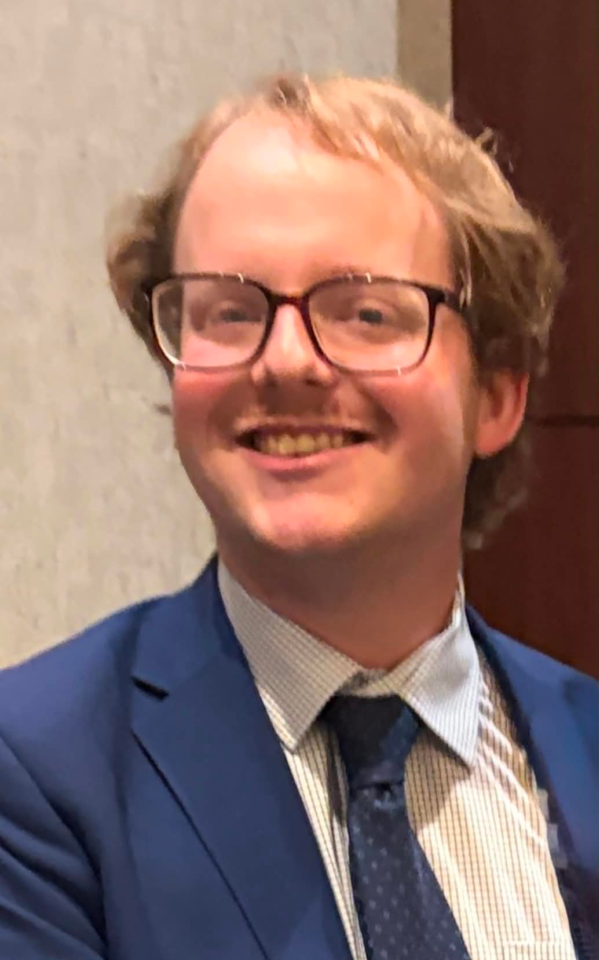
Social Democrats USA is thrilled to announce that our National Executive Committee member from Alabama is running to implement lifesaving social democratic policy in his state’s House of Representatives, located in west-central Alabama. We are proud to endorse him and be a part of a Blue Wave in the South! Christian, a 22-year-old University of Alabama senior studying history and theatre, with a minor in political science, is running to represent District 16, a district greatly hurt after 15 years under Republican supermajority rule. If elected, he will be the youngest person to serve in Alabama’s House of Representatives.
In a February 10, 2026 interview with WVUA Digital reporter Madison Brainerd, Christian shared that during Kamala Harris’s presidential campaign, he attended a dinner hosted by the University of Alabama College Democrats and Bama Students for Harris student groups, which ultimately planted the seed for him to support the Democratic candidate running for his US House district. When no such candidate appeared, Christian realized that it fell to him to step up and be the change that his distressed neighbors so desperately needed.
As stated on his campaign website, Christian is a “life-long Tuscaloosa County resident” and “the son of a log-truck driver, grandson of a CWA telephone operator, and great-grandson of the Regional Chair of the International Lady Garment-Workers Union.” He “knows what it’s like for families to struggle: with medical debt, having to put food on the table when the family breadwinner is in the hospital, and what it’s like for everyday Alabamians who struggle paycheck to paycheck.” As a “proud follower of Christ” and “firm believer in the Sermon on the Mount,” Christian is all too familiar with the hypocrisy of politicians claiming to seek and serve in public office “because of their Christian morals and their good Christian teachings” while supporting the deadly Republican agenda. At a meeting of the Tuscaloosa County Democratic Party, posted to YouTube on March 22, 2026, he challenged his state’s Republican supermajority with the following statement:
“But Scripture says, in 1 Corinthians 13:13, ‘Now abide these three: faith, hope, and charity. And the greatest of these is charity.’ But they are uncharitable — deeply, deeply uncharitable people. I mean, is it charitable to refuse to expand Medicaid because you want to own the libs and stick it to Obama? No! Is it charitable to let mothers bleed out because our rural hospitals have closed? It’s sickening. And is it charitable to be in the hands of a monopoly, a power company that, quite frankly, is communistic … if you will? That might sound crazy, but what we see right now is corporate socialism for Alabama Power and laissez-faire capitalism at its worst for you and me and the working people of this state. And you have a state government that … uses police force against our striking workers.”
If elected, Christian will work to alleviate the burden on the working class through a 2% flat cut in sales tax, offset by instituting a new tax bracket for Alabama’s wealthiest. He also plans to expand Medicaid and childcare tax credits, implement universal pre-K, mandate gun safety education in schools, repeal right to work laws, require union contracts for any state contracts where a union exists, ban private equity from buying single family homes, end grocery taxes, add ten new chronic wasting disease testing centers to help with the deer chronic wasting disease issue, legalize and tax marijuana, fix overcrowding in prisons by releasing non-violent weed offenders, and build more mental health institutions with at least 300 new beds.
For a detailed list of his policies, please visit the “Issues I Would Like to Address” section of his website at Christian Martin for HD16.
Also, Christian has the patience and fortitude to meet the demands of legislative and committee work, staying the course through the tedious moments in order to fully represent his constituents. As a student, he serves as President of the University of Alabama College Democrats (UACD) and Alabama State College Democrats Federation (ALCD), and as Vice President of the UCW-CWA auxiliary organization Friends of the Union on Campus. He also serves as a Committeeman on the Tuscaloosa County Democratic Executive Committee and is a proud dues-paying associate member of the UCW-CWA.
Most excitingly for us at SDUSA, Christian proudly states on his website that he is the Alabama Committeeman “for the Social Democrats of The United States of America (SDUSA) America’s leading historic anti-Communist Pro-Labor political organization founded by such respected leaders as Bayard Rustin and A. Phillip Randolph.”
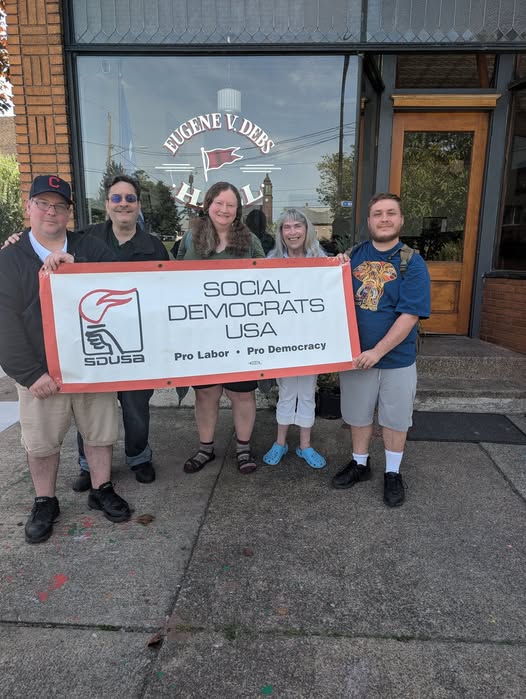
Michael Mottern, Sheldon Ranz, Susan Stevens, Patty Friend, Aaron Coleman
The 2026 National Educational Conference of Social Democrats USA continued through Labor Day weekend in Buffalo, New York, bringing together members, candidates, organizers, and activists for several days of discussion, political education, grassroots organizing, and participation in Buffalo’s Labor Day traditions. Days Three, Four, and Five brought the conference’s work into particularly sharp focus.
Day Three concentrated on electoral campaigns and the lessons candidates were learning from voters on the ground. Day Four took those discussions into the streets through participation in Buffalo’s Labor Day parade. The final day then turned toward organizational development, grassroots activism, and a broader discussion of what distinguishes social democracy from other traditions on the left. Together, the three days emphasized a common theme: political organizations have to connect ideas with practical work, campaigning, organizing, participating in labor and community movements, and delivering tangible results.
Day Three: Candidates, Campaigns, and Lessons from the 2026 Elections
Day Three began with interviews with candidates who had recently participated in contested elections, giving conference participants an opportunity to hear directly about the experience of campaigning, communicating with voters, and building political coalitions.
Anne Parelkar on campaigning in Kansas
Anne Parelkar, who discussed her campaign for the U.S. Senate in Kansas, described the race as her first experience running for elected office. She said that the campaign had been demanding but had provided an enormous amount of experience and had brought together supporters from Kansas, across the country, and internationally.
One of Parelkar’s principal lessons concerned political labels. She argued that words such as “socialist,” “Democrat,” and “Republican” can cause voters to make assumptions before hearing a candidate’s actual position. Her campaign therefore sought to emphasize common concerns and concrete needs rather than allowing the conversation to be defined solely by ideological labels. Parelkar also discussed the importance of distinguishing between ordinary political disagreements and genuinely extremist or oppressive positions. She said candidates should be willing to have conversations with people across political differences while recognizing that some people may not feel safe engaging with individuals advocating explicitly discriminatory or authoritarian positions.
She identified misinformation, social media, and the need for greater accountability from elected officials as major challenges facing political organizing. She also emphasized the importance of engaging younger voters and finding ways to convince more young people that participation in elections matters. When asked about Kansas issues, Parelkar identified data centers and healthcare as particularly important concerns. She connected those issues to a larger argument for antitrust enforcement, stronger unions, and reducing the concentration of economic power in large corporations.
The Democratic Party and candidate support
A significant portion of the discussion concerned Parelkar’s experience with the Johnson County Democratic organization. According to Parelkar, the organization had established conditions for receiving certain forms of campaign support, including a requirement that candidates demonstrate that they were running a “serious” race. She said fundraising became a determining factor and that she challenged the decision because of the substantial volunteer effort invested in her campaign.
Parelkar said she believed the episode illustrated a broader tension between party organizations and grassroots candidates. In her account, volunteer labor and the participation of people who could not afford to make large financial contributions deserved to be valued alongside fundraising. She emphasized that her criticism was directed at the process rather than every individual within the Democratic Party, noting that she had also received support and guidance from Democratic officials elsewhere in Kansas. She ultimately argued for a political culture in which people do not have to personally like one another to work together. “We don’t have to be best friends,” she said, but people can still be on the same team when they share a commitment to accomplishing something positive.
Taylor Moreland and rural Kansas
The conference then heard from Taylor Moreland, a candidate for the Kansas House in House District 7 in southeast Kansas. Moreland explained that her decision to run came in large part from her experience working in the foster care system. She described seeing firsthand the difficulties facing children and families and concluded that more lawmakers with direct experience of working class life and public institutions were needed. She said she wanted government to pay greater attention to people’s lived experiences rather than focusing primarily on statistics and institutional interests.
Moreland described voter contact as one of the most challenging and rewarding parts of the campaign. Because she had relatively few volunteers, she personally conducted a substantial amount of voter outreach. She also deliberately reached out to Republican voters, arguing that an elected representative would ultimately represent everyone in a district, regardless of how they voted.
Her campaign also illustrated the importance of learning from constituents rather than assuming that candidates already understand every local issue. Moreland said she had spoken directly with farmers and ranchers to learn about agriculture, an especially important subject in a rural Kansas district. The issues she heard most frequently included property taxes, marijuana legalization, healthcare, and the future of rural hospitals. She also discussed growing local concerns about energy, water resources, and the environmental implications of nuclear projects and proposed data centers in and around Parsons. Moreland told the conference that volunteers could help through phone banking, campaign outreach, and other forms of grassroots activity. Conference participants also discussed helping with phone banking later in the campaign.
Looking across the 2026 election landscape
The candidate discussions were followed by a broader analysis of the 2026 elections presented by Sheldon Ranz. Ranz focused heavily on the campaign and political development surrounding New York City Mayor Zoran Mamdani, using it as a case study in grassroots campaigning, electoral strategy, and the relationship between candidates and established political institutions.
A major theme of the presentation was direct voter contact. Ranz described Mamdani’s campaign as having developed an extensive ground operation and highlighted efforts to reach voters personally, particularly in communities where the campaign was facing political opposition. Ranz also emphasized the importance of governing after an election. He discussed the Mamdani administration’s approach to rent stabilization, expanded healthcare for young children, and municipal infrastructure. He presented these activities as examples of a “sewer socialism” tradition in which local government demonstrates its political program through concrete improvements in daily life.
The presentation then examined Mamdani’s endorsements of other candidates and argued that electoral organizations should assess not only whether candidates share their political outlook, but also the actual circumstances of the races in which they are competing. Ranz described this as a lesson in strategic realism, particularly when deciding where organizational resources and political influence can make a difference. The broader discussion included examples from Seattle, Michigan, Wisconsin, and elsewhere, with the presentation arguing that the electoral developments of 2026 were part of a wider national political landscape rather than being confined to New York City.
Day Three therefore concluded with a practical lesson for organizers: successful campaigns require more than attractive platforms. They require sustained voter contact, knowledge of local conditions, coalition building, careful strategic choices, and the ability to connect political ideas to concrete concerns.
Day Four: SDUSA in the Buffalo Labor Day Parade
Day Four moved the conference from discussion to public participation. Conference participants joined Buffalo’s annual Labor Day parade, an event organized through the AFL CIO and its affiliated unions. The parade provided a direct connection between SDUSA’s educational conference and the city’s labor movement. The parade itself was described as a major Buffalo tradition. Participants marched through broad city avenues while residents gathered outside their homes to watch and cheer the marchers. The atmosphere created an unusually direct interaction between the labor movement and the surrounding community, with families and children treating the parade as an annual civic event.
The march lasted approximately an hour and a half to two hours. Members of SDUSA participated alongside the broader labor community, making the Labor Day event a practical expression of the conference’s emphasis on connections between social democracy, organized labor, and community activity. The day also produced an unexpected opportunity for public outreach. Conference participants were interviewed by a local newspaper and photographed during the event. After the march, participants returned to Debs Hall, where they continued interacting with grassroots activists involved in the Labor Day festivities and a bicycle ride.
The significance of Day Four was therefore not simply ceremonial. The parade placed conference participants directly alongside the labor movement in a public setting and provided an opportunity to interact with workers, residents, activists, and other community participants outside the conference room.
Day Five: Organizational Growth and the Meaning of Social Democracy
The final day turned inward, focusing on what participants had learned and what they intended to do with it. Sheldon Ranz began the closing discussion by highlighting SDUSA’s organizational growth. He said the organization had fewer than 50 members when he joined in 2016 and was approaching 200 members in 2026. He also said that the organization’s financial resources were stronger than they had been during his decade of membership, allowing SDUSA to organize a conference of greater scope and duration than it had been able to hold in earlier years.
Ranz used the New York City chapter as an example of how a relatively small organization could generate political relationships and public activity. He discussed SDUSA’s contacts with Mayor Mamdani, efforts to develop additional relationships with political and peace organizations, and plans for further activity in New York. The larger organizational lesson was that SDUSA’s resolutions are intended to lead to action. Ranz encouraged members to organize local chapters and use the organization’s resolutions as starting points for community activity. He noted that five dues paying members are sufficient to establish a chapter and argued that organizational resolutions should serve as guides for practical work rather than remaining statements on paper.
Defining social democracy
The final major intellectual discussion of the conference centered on the question of why SDUSA calls itself social democratic. Patty Friend presented a series of statements written in the style of historical social democratic figures and used them to explore the distinctions between socialism, democratic socialism, and social democracy. The exercise explicitly asked what social democracy means and why SDUSA identifies with that tradition.
The first statement, presented in the style of Max Shachtman, contrasted social democracy with both unregulated capitalism and authoritarian forms of state collectivism. It described social democracy as combining economic justice with political liberty through institutions such as progressive taxation, universal healthcare, strong unions, and public investment.
The second, written in the style of Bayard Rustin, connected economic democracy to the traditions of the civil rights and labor movements. It argued that formal political rights are incomplete when people lack meaningful access to economic security and linked social democracy to full employment, healthcare, housing, education, and strong unions. It also emphasized coalition building among labor, the Black freedom movement, liberals, and the democratic left.
The final statement drew the clearest distinction between democratic socialism and social democracy. It described democratic socialism as ultimately seeking social or public ownership of major parts of the economy through democratic means, while presenting SDUSA’s social democracy as a distinct approach centered on achieving economic reforms and greater democratic control through existing political institutions. The discussion therefore framed social democracy not as political passivity, but as a specific strategy for pursuing economic and social reforms through democratic institutions, organized labor, elections, and sustained grassroots activism.
From Education to Organization
The closing sessions returned to a theme that had appeared throughout the preceding days: education is valuable only when it produces action. The candidates on Day Three spoke about knocking doors, talking with voters, learning local issues, building volunteer organizations, and adapting campaigns to the communities they hoped to represent. Day Four put conference participants directly into Buffalo’s labor movement through participation in the Labor Day parade. Day Five challenged SDUSA members to carry the same spirit of practical organizing back into their own communities.
The conference’s closing message was therefore both organizational and political: members were encouraged to build chapters, participate in local movements, support campaigns and community efforts and turn SDUSA’s adopted principles into practical work. The final discussion also placed that organizing work in a larger historical framework. Social democracy was presented as a tradition concerned with linking political democracy to economic security, supporting organized labor, expanding access to healthcare, housing, and education, and pursuing change through democratic means.
Looking Ahead
The 2026 Educational Conference ended in Buffalo with SDUSA reflecting on both its past growth and its future responsibilities. Day Three demonstrated the challenges and possibilities of electoral politics through the experiences of candidates in Kansas and the wider lessons participants drew from the 2026 elections. Day Four connected the organization to the labor movement through Buffalo’s Labor Day parade. Day Five focused on the organization’s expanding membership and resources, the development of local chapters, and the continuing discussion over how social democracy should be understood and practiced.
The conference ultimately presented political education, electoral organizing, labor participation, and grassroots activism as parts of the same larger project. For SDUSA, the conclusion of the conference was not an endpoint. It was a call for members to take the ideas discussed in Buffalo and carry them back into their own communities, building organizations, participating in movements, supporting democratic candidates and causes, and working toward the social democratic goals that brought the organization together in the first place.
On September 4, 2026, it began and Michael Mottern and David Hacker gave an opening welcome and brief history of SDUSA.
But things got into full swing on the 2nd day, September 5th, when Social Democrats USA held its Educational Conference, bringing members and affiliates together for a full day of political education, organizational discussion, debate, and local organizing.
The conference opened with consideration of a resolution supporting universal food benefits. Members discussed hunger as a fundamental social and economic issue and the limitations of relying on food banks and existing programs with eligibility and administrative barriers. The resolution passed by unanimous consent, affirming SDUSA’s commitment to making the elimination of hunger a legislative priority.
A major discussion focused on SDUSA’s political identity and the organization’s relationship to other traditions on the democratic left. Members debated the differences between SDUSA and organizations such as the Democratic Socialists of America while also considering how broad SDUSA should be in its ideological outlook. The discussion ultimately produced language affirming that SDUSA can include social democrats, democratic socialists, and others who differ over the long-term future of capitalism while sharing a commitment to democratic politics and social justice. The amended resolution passed unanimously.
Members also discussed constitutional reforms and the continued development of SDUSA’s organizational structure. Chapter and affiliate reports highlighted organizing efforts in New York, Kansas City, Missouri, and elsewhere, including membership growth, local fellowship, political campaigns, writing, and efforts to establish stronger local organizations.
Another recurring theme was the kind of political culture SDUSA seeks to build. Speakers emphasized the importance of welcoming new members, practicing empathy, maintaining space for disagreement, and resisting the factionalism and personal attacks that can weaken democratic organizations.
The conference also addressed difficult questions surrounding Israel, Palestine, Zionism, anti-Semitism, and SDUSA’s historical positions. The discussion reflected the organization’s continuing effort to engage seriously with internal differences while maintaining democratic standards and opposing authoritarianism.
Educational presentations broadened the conversation beyond internal organizational questions. Dr. Brian Matlock’s presentation, “Socialism in the Heartland,” examined how organizers can build support in rural and working-class communities by listening to people’s experiences, speaking in accessible language, and identifying traditions of solidarity already present in local communities. Other presentations explored Indigenous rights, community resilience, poverty and deindustrialization in Buffalo, and the possibilities of municipal socialism.
Taken together, the conference demonstrated SDUSA’s commitment to democratic political education, economic justice, working-class organizing, and building an organization capable of turning those principles into action.